
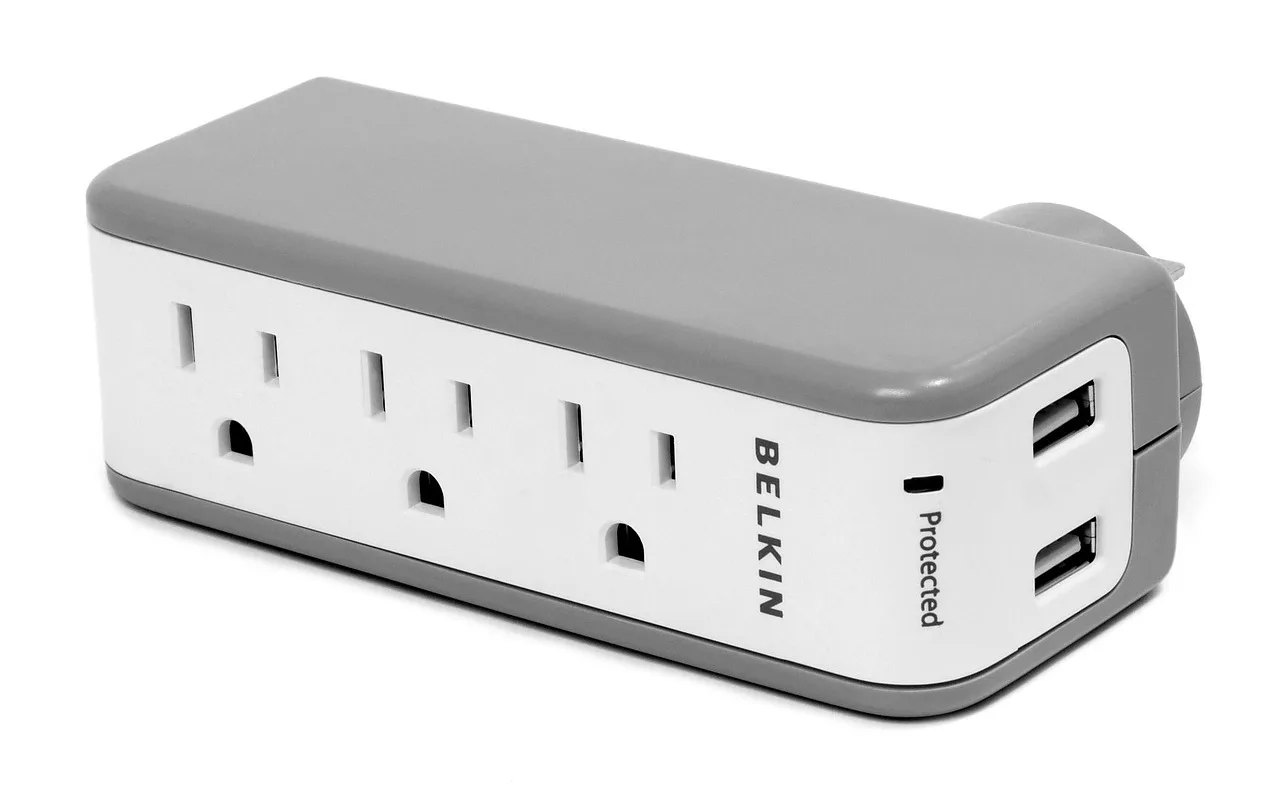
You are standing in front of a shop shelf in Dhaka, holding two white boards with sockets. One says power strip, one says surge protector, and the price difference is a few hundred taka. The short answer: a power strip only multiplies your sockets, while a surge protector in Bangladesh also absorbs the voltage spikes that come with load shedding and generator switching. If you own a TV, a fridge, or a desktop computer, buy the surge protector. If you only need more plug points for phone chargers and table fans, a plain power strip is enough.
What actually damages your appliances during load shedding?
Most people blame the power cut itself. The damage usually happens when the power comes back.
Advertisement
When load shedding ends, the supply rushes back on and the voltage can overshoot before it settles. The same thing happens when your building switches to a generator and back to the grid. Motors in the fridge and compressor in the AC draw a sudden current, and the voltage on the line wobbles. A cheap power strip passes all of that straight to your devices. A surge protector has a metal oxide varistor (MOV) inside that clips the excess voltage and sends it to the earth line.
There is a second, slower problem: low voltage. In many areas the line sits below 200V for hours, especially in summer when everyone runs an AC. That is not a surge, and a surge protector will not fix it. Low voltage strains compressors and motors more than people realise. If your fridge sounds tired in the afternoon, that is probably voltage sag, not a surge.
So you are dealing with two different risks: fast spikes and slow brownouts. A surge protector handles the first. Only a voltage stabiliser handles the second.
Power strip vs surge protector: what is the real difference?
A power strip is a extension lead with sockets. Nothing inside protects anything. A surge protector is a power strip with protection components, usually an MOV and sometimes a gas discharge tube, plus a fuse or breaker.
| Feature | Power strip | Surge protector |
|---|---|---|
| What it does | Adds sockets | Adds sockets and clips voltage spikes |
| Protects against lightning surges | No | Partly, if earthed properly |
| Protects against load shedding spikes | No | Yes, up to its rating |
| Fixes low voltage | No | No |
| Typical price in BD | A few hundred taka | Several hundred to a few thousand taka |
| Lifespan of protection | Not applicable | MOV degrades after repeated surges |
| Good for | Chargers, fans, lamps | TV, fridge, computer, router |
One thing the table cannot show: a surge protector only works if your building has proper earthing. In many older Dhaka buildings the third pin goes nowhere. In that case the MOV still clips between live and neutral, but it cannot dump the excess to earth, so protection is weaker. Ask your building manager whether the earth line is real before you spend on a premium unit.
Which appliances in a Bangladeshi home need a surge protector?
Not everything deserves one. Think in terms of replacement cost and sensitivity.
- TV and desktop computer: yes. A modern LED TV or a PC with a hard drive is expensive to replace and sensitive to spikes. Put these on a surge protector.
- Fridge: yes, but with a caveat. A fridge compressor is robust, but the control board on newer inverter fridges is not. If you have an inverter fridge, protect it. If it is an old non-inverter model, a surge protector helps but a stabiliser matters more.
- Router and ONU: yes. These are cheap but fail often, and a spike through the router can also travel down the LAN cable to your PC.
- Phone chargers: not really. A decent charger already tolerates messy input, and a spike usually kills the charger before the phone. Replace the charger, not the phone.
- Table fans and lights: no. A plain power strip is fine.
If you are renting a single room in Dhaka, you probably do not need to protect everything. Protect the TV and the router, and leave the rest on a normal strip.
How much should you spend, and what should you check on the box?
You do not need the most expensive unit. You need one that is honestly rated.
Look for a clamping voltage around 330V to 400V, a joule rating printed clearly, and a maximum surge current in kiloamperes. A unit rated around 1000 joules is reasonable for a TV and router setup. Very cheap protectors often print a joule number that means little, so buy from a shop that will exchange a failed unit.
Check these before paying:
- The plug has a real earth pin, not a plastic dummy.
- The cable is thick enough. Thin cables heat up when you run a heater or an iron.
- There is a protection indicator light. When the MOV dies, the light goes out, and you should replace the unit.
- The socket grips the plug firmly. Loose sockets arc and create their own heat.
A practical range in Bangladesh: a basic branded surge protector costs a few hundred to around a thousand taka, while units with higher joule ratings and better build go higher. Do not pay extra for USB ports unless you actually need them. Those ports fail first.
What a surge protector will not save you from
This is where most buying advice goes quiet. A surge protector is not a voltage stabiliser, and it is not a UPS.
If your area has long low-voltage periods, a stabiliser for the fridge and AC is the better spend. If your desktop computer crashes every time the power flickers, you need a UPS, because a surge protector does nothing about a power cut. If lightning strikes the building directly, no plug-in device will save your TV. Unplug expensive electronics during a thunderstorm, full stop.
Also remember that surge protection is sacrificial. Each big spike uses up some of the MOV's life. After a few seasons of heavy load shedding, a protector that has taken several hits may be doing nothing while still looking fine. The indicator light is your only clue.
A simple setup for a typical Dhaka flat
For most homes, one good surge protector in the living room and one at the computer desk covers the expensive gear. Keep the fridge on a stabiliser if your line sags. Keep phone chargers on a cheap strip. Replace any protector whose indicator light has gone dark. And during a storm, unplug the TV and router rather than trusting the board.
Budget for protection as part of the appliance cost, not as an afterthought. A protector that costs a fraction of your TV is cheap insurance for the next few load shedding seasons.