
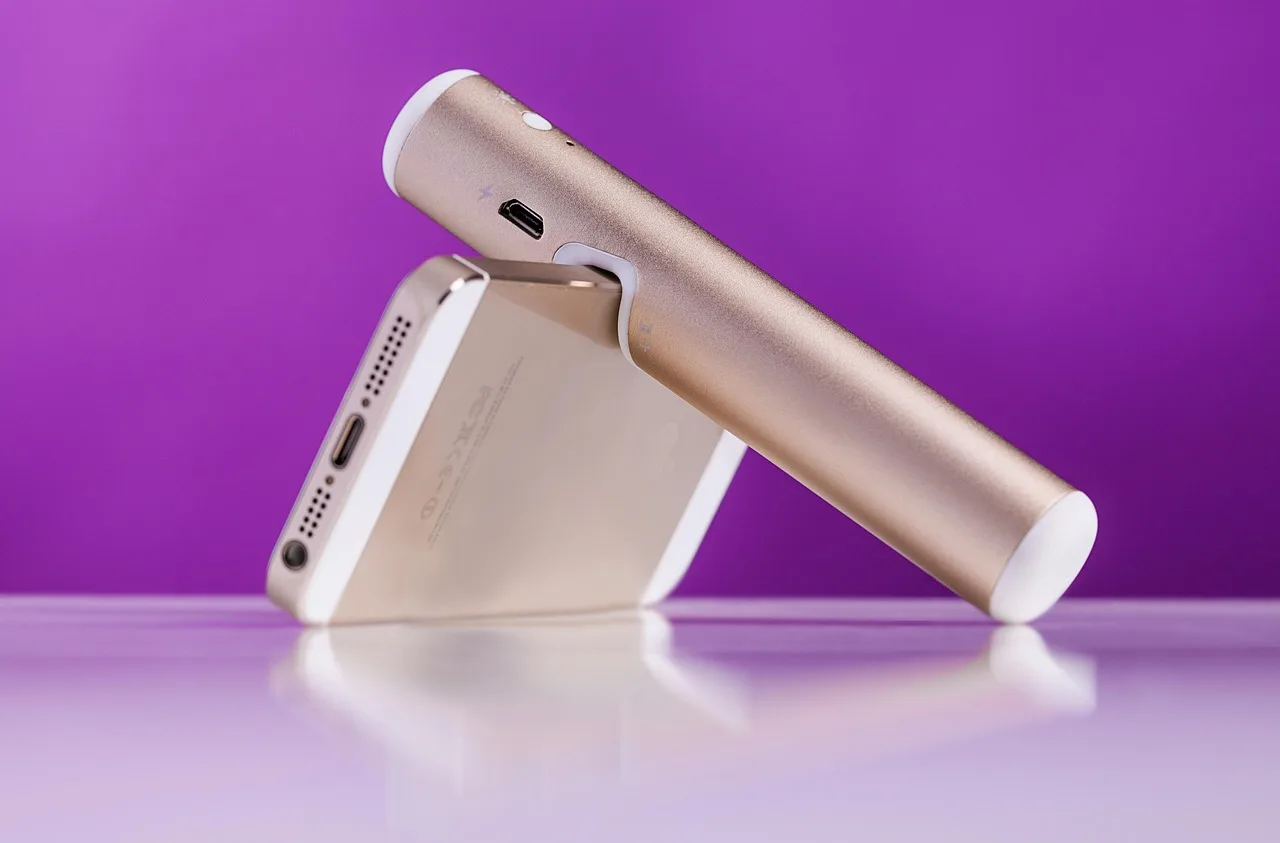
You are standing in Bashundhara City, three shops have shown you three power banks, all claim 20,000mAh, and the prices range from ৳1,200 to ৳4,500. The honest answer: buy by real output capacity and charge speed, not by the number printed on the shell. A 10,000mAh bank with 20W output will charge your phone faster and more often than a fake 30,000mAh brick that dribbles out 5W. This power bank buying guide Bangladesh edition walks through what actually matters here: honest capacity, port wattage, load shedding math, and the safety marks that separate a two-year bank from a two-month one.
How much capacity do you actually need?
Capacity is the most lied-about spec in the local market. The number on the box is the cell's rated capacity at 3.7V, not what reaches your phone. Conversion losses (heat, voltage step-up to 5V/9V) eat roughly 30 to 40 percent. So a genuine 10,000mAh bank delivers about 6,000 to 6,500mAh to your device. That is roughly one and a half full charges of a 4,500mAh phone battery, not two and a half.
Advertisement
Here is the practical mapping:
- 5,000mAh: one partial to full phone charge. Pocketable, around 120 to 150g. Good for a commute or a dinner outing, useless for a full day out.
- 10,000mAh: the sweet spot for most people in Dhaka. One and a half phone charges, or one phone charge plus a full earbuds top-up. Around 200 to 250g.
- 20,000mAh: two to three phone charges, or one phone plus a tablet. Around 400 to 450g, which you will feel in a jeans pocket.
- 30,000mAh and above: laptop territory. Only worth it if you are carrying a USB-C laptop and actually need to charge it away from a wall.
If you commute daily and charge your phone overnight at home, 10,000mAh is enough. If you travel to Cox's Bazar or Sylhet for a weekend and share charging with a friend or family member, go 20,000mAh.
How many full phone charges will a 10,000mAh power bank give?
Roughly one and a half, for a typical 4,500 to 5,000mAh phone battery. Work it out yourself: take the printed capacity, multiply by 0.65, then divide by your phone's battery capacity. A 10,000mAh bank gives about 6,500mAh usable, divided by 5,000mAh equals 1.3 charges. A 20,000mAh bank gives about 13,000mAh usable, so 2.6 charges.
That 0.65 figure is not a scam, it is physics. Some of the loss is heat, some is the voltage conversion inside the bank, and some is your phone's own charging circuit inefficiency. Any brand claiming near-100 percent conversion is either measuring differently or lying.
One more thing people miss: charging the bank itself takes time. A 10,000mAh bank on a standard 10W charger takes about 5 to 6 hours to refill. On an 18W or 20W charger with USB-C PD input, that drops to roughly 3 hours. If you only have one charger at home, this matters more than you think.
What wattage do you need for fast charging?
Wattage (W) determines speed, and it is the spec most buyers ignore. A 20,000mAh bank with a 5W output port is a slow brick. A 10,000mAh bank with 22.5W output will fill your phone in about an hour.
The rule: match the bank's output to your phone's maximum charging speed. If your phone supports 18W fast charging and your bank only outputs 10W, you are leaving half the speed on the table. If your phone caps at 18W and your bank pushes 65W, you gain nothing on the phone, though you might use that wattage for a laptop.
Common tiers you will see in Dhaka shops:
- 5W to 10W: slow. Fine overnight, frustrating when you are about to leave the house.
- 18W to 22.5W: the current standard for mid-range Android phones. This is what you want.
- 30W to 45W: fast enough for many USB-C laptops and newer flagship phones.
- 65W and above: laptop-grade. Only buy if you are charging a laptop, because the bank itself gets heavier and pricier.
Also check which port does what. Many banks have three ports but only one delivers full wattage. The other two might be 5W each. Read the tiny print near each port, not the big number on the front.
Ports, cables, and the connectors that actually matter
Port count is less important than port type. A bank with two USB-A ports and one USB-C port is the practical layout for most people here.
- USB-C with Power Delivery (PD): the one you want for both input and output. It charges the bank faster and charges modern phones faster.
- USB-A: still useful for older phones, earbuds, and the cheap cables you already own.
- Micro-USB input: a sign of an older design. It works, but it means slow refills.
Cables matter as much as the bank. A ৳100 cable from a footpath shop can cap your charging at 5W even if the bank supports 22.5W. If you buy a fast bank, buy one decent USB-C cable with it. Test it once: if your phone says "charging rapidly" or shows a fast-charge icon, the cable is fine. If it just says "charging," the cable or port is the bottleneck.
Load shedding math: what size keeps you running?
A typical load shedding block in Dhaka runs one to two hours. Your phone, if you are actually using it, drains maybe 15 to 25 percent in that window. So even a 5,000mAh bank covers a single outage comfortably.
The bigger risk is multi-hour outages in summer, when you also want to run a fan or charge a second device. That is when 20,000mAh earns its weight. Two phones plus a small USB fan for two hours is well within a 20,000mAh bank's range, and still leaves room for a top-up.
If you are buying primarily for load shedding at home rather than for travel, weight matters less. A heavier 20,000mAh bank that lives on a shelf is a better buy than a light 5,000mAh one you keep recharging.
What safety features should you check before paying?
This is where cheap banks fail, sometimes literally. A power bank is a lithium battery in a plastic shell, and a bad one can swell, overheat, or worse.
Check for these before handing over cash:
- Overcharge and over-discharge protection: prevents the cells from being pushed past safe limits.
- Short circuit protection: cuts power if a cable or port faults.
- Temperature protection: throttles output when the bank gets hot, which happens in a Dhaka summer.
- A recognizable brand name and a real warranty: even a one-year warranty from a shop you can walk back into is worth more than a ৳200 saving on an unbranded brick.
Avoid banks that feel suspiciously light for their claimed capacity. A genuine 20,000mAh bank weighs around 400g. If it weighs 180g and claims 20,000mAh, the cells are not there.
Which power bank should you buy for your situation?
| Your situation | Capacity | Output | Notes |
|---|---|---|---|
| Daily commute, charge at home | 10,000mAh | 18W to 22.5W | Best all-round pick |
| Weekend trips, sharing with family | 20,000mAh | 22.5W+ | Heavier, but fewer top-ups |
| Load shedding at home | 20,000mAh | 18W+ | Leave it on a shelf |
| Laptop user on the move | 20,000 to 30,000mAh | 45W to 65W | Check PD support |
| Light user, earbuds and phone | 5,000 to 10,000mAh | 10W to 18W | Small and cheap |
Buy from a shop or online seller with a return policy, pay via bKash or Nagad if you want a record, and test the bank within the first week by charging your phone from 20 percent and timing it. If it takes more than two hours to add 50 percent on a phone that supports fast charging, return it.
The one-line takeaway
Buy a 10,000mAh bank with at least 18W USB-C output for everyday use, step up to 20,000mAh only if you travel often or want backup during long load shedding, and never trust a capacity number that comes with a suspiciously light box.