A fan with five speed settings is not automatically better than one with three. What matters is the total airflow range the motor can produce and how evenly the speeds are spread across it. A 5-speed fan that tops out at the same airflow as a 3-speed model just chops the same range into smaller slices, which feels smoother on paper but changes almost nothing in the room.
So the honest answer is: more speeds help when the lowest setting is genuinely gentle and the highest is genuinely strong. If the extra speeds are squeezed into a narrow band, you paid for a button, not a feature.
What do fan speed settings actually change?
Advertisement
Every fan has a motor that spins a blade. A speed setting is just a voltage or pulse-width signal telling that motor how fast to turn. The result you feel is airflow, usually measured in cubic feet per minute (CFM) or cubic metres per hour (m³/h).
Here is the part most spec sheets hide. A fan's top speed is fixed by the motor and blade design. The number of settings only decides how finely you can slice the space between off and full power.
- A 2-speed fan gives you low and high. Simple, cheap, and often enough for a bedroom.
- A 3-speed fan adds a middle step. This is the classic ceiling and pedestal fan layout, and it exists because three points cover a room's needs reasonably well.
- A 5-speed fan adds two more steps, usually near the bottom and top of the range.
The useful question is not how many steps exist. It is whether any step lands on the airflow you actually want.
Are 5-speed fans better than 3-speed fans?
Usually no, and here is the concrete reason. If a 3-speed fan moves roughly 1,000 to 3,000 m³/h and a 5-speed fan moves the same 1,000 to 3,000 m³/h, the five-speed version is not more powerful. It is the same fan with finer controls.
Where extra speeds genuinely earn their place:
- Sleep. Going from a medium setting to a slightly-lower-medium setting can be the difference between sleeping and lying awake listening to air rush past your ears. A 5-speed fan can offer a step that a 3-speed fan simply does not have.
- Small rooms. In a 10 by 10 foot bedroom, the jump from speed 1 to speed 2 on a 3-speed fan can be too much. A 5-speed fan's extra low steps let you run it all night without it feeling like a wind tunnel.
- Shared spaces. Two people, two preferences. More granular steps make compromise easier.
Where they do not:
- Large open rooms where you will run it near maximum anyway.
- Any fan where speed 1 is already too strong. Extra steps at the top do not fix a floor that is too high.
The setting nobody mentions: the lowest speed

If you only check one number before buying, check the lowest setting, not the highest. Most buyers test a fan in a shop at full blast and take it home to discover speed 1 is a gale.
This is where cheap fans fail. A motor with a narrow usable range cannot slow down gracefully, so the manufacturer gives you three speeds that all feel fast. The fan is technically 3-speed. Practically, it is 1-speed with two louder versions.
A good low setting should be quiet enough to sleep next to and gentle enough that you do not need a blanket in September. If a fan's speed 1 moves a noticeable amount of air across a bed three feet away, that fan has no real low setting.
How speed settings differ by fan type
| Fan type | Typical speeds | What the extra speeds buy you |
|---|---|---|
| Ceiling fan | 3, sometimes 5 or 6 | Finer control in a room you use year-round; reverse for winter |
| Pedestal or stand fan | 3 | A usable low, medium, and high for a whole room |
| Table fan | 2 or 3 | Compact cooling at a desk, rarely needs more |
| Tower fan | 3 to 5, plus modes | Sleep and natural modes that cycle speeds automatically |
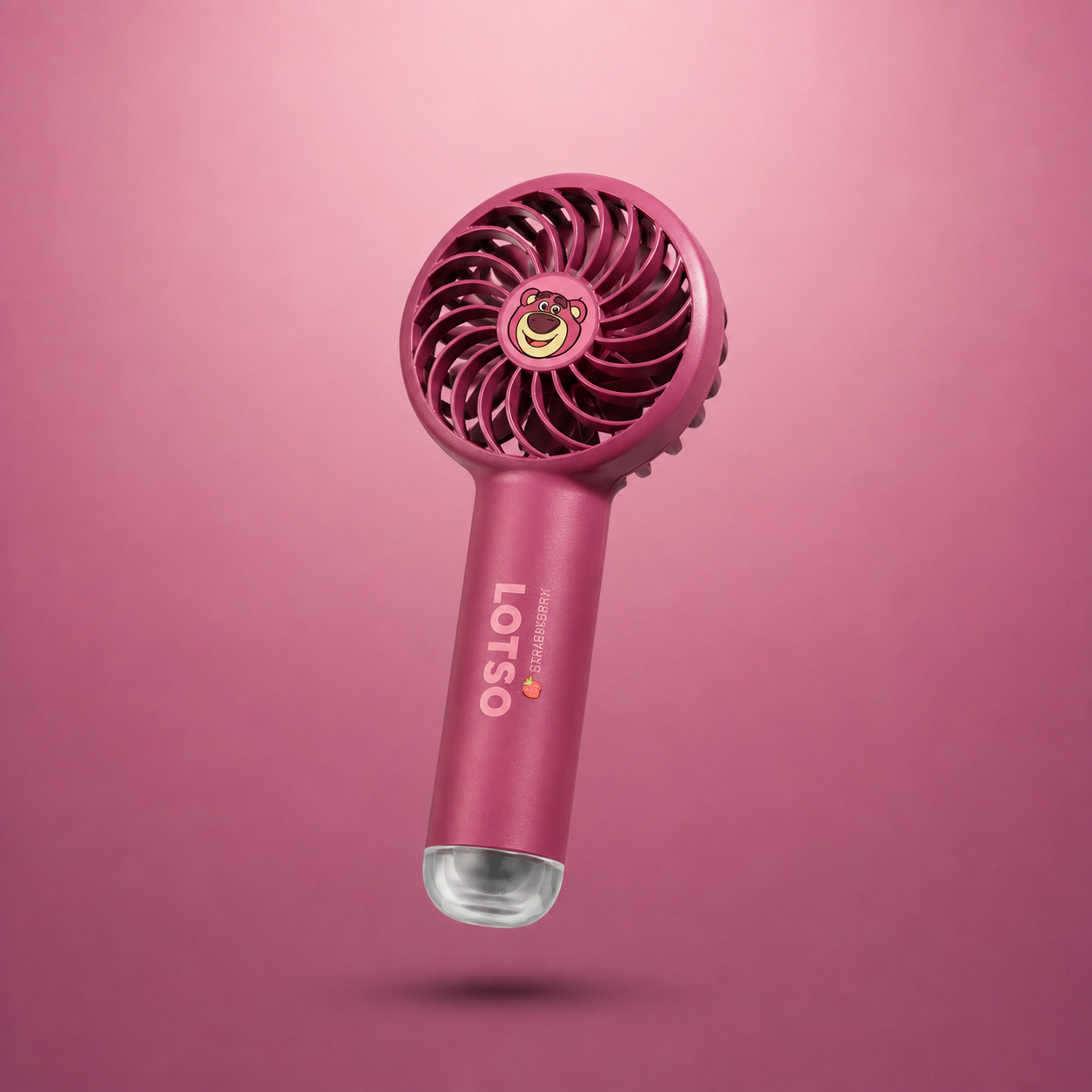
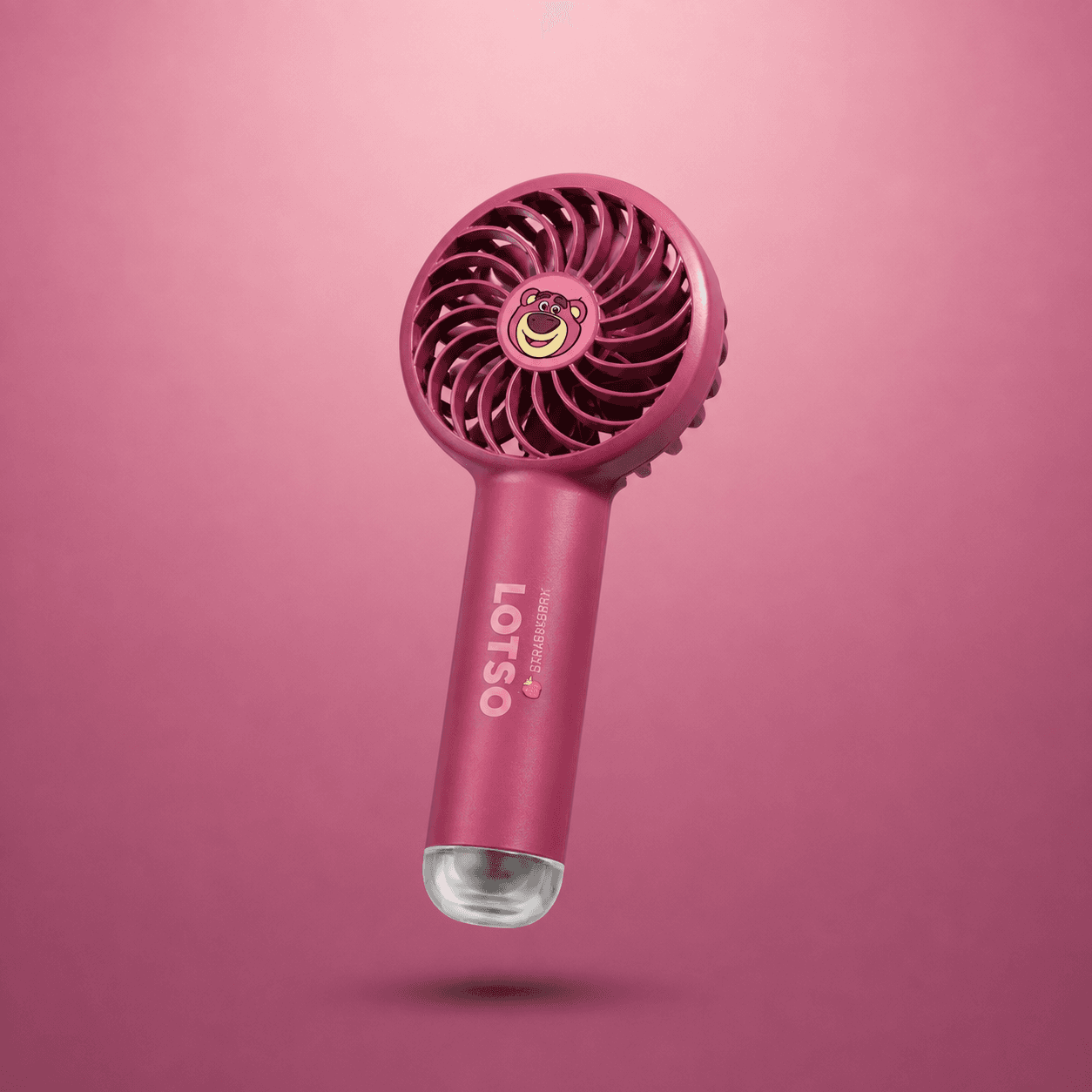
| Mini handheld fan | 1 to 3 | Genuine battery tradeoff, not just comfort |
That last row matters more than it looks. On a battery-powered fan, each extra speed setting is a different drain rate on a fixed battery. A 2,000 mAh handheld fan might run around four hours on low and closer to one hour on high. Two speeds there are not a limitation. They are an honest description of what the battery can do.
Why tower fans have the most speed settings
Tower fans lean hardest on speed counts, and there is a design reason. Their blades are small and the airflow is narrow, so the difference between settings is easier to feel. Manufacturers also stack on modes: sleep mode that steps down over time, natural mode that varies speed to mimic wind, and sometimes a dedicated quiet setting.
Some of this is genuinely useful. Sleep mode on a tower fan is one of the few "smart" features that solves a real problem, because a fan that is pleasant at 11pm is often too cold at 3am.
Some of it is marketing. A fan advertising 12 speeds plus 3 modes usually has 5 real speeds and 7 combinations of those same 5. You are not getting more airflow. You are getting more buttons.
How to test speed settings before you buy
You cannot feel a fan through a product page, but you can read between the lines.
- Look for airflow figures, not speed counts. If a listing gives m³/h or CFM, compare those. If it only says "5 speeds," that tells you nothing about power.
- Check the wattage. A fan drawing 45W at maximum is in a different class from one drawing 15W, regardless of how many speeds each claims.
- Read reviews for the phrase "too strong on low." That is the single most common complaint about cheap multi-speed fans.
- For battery fans, look for runtime at each setting. A fan quoting "up to 8 hours" is quoting its lowest speed, always.
- Prefer odd numbers of speeds if you want a true middle. A 2-speed fan has no middle setting, which matters more than people expect.
When more speeds are worth paying for
Pay for extra speeds when at least one of these is true:
- You sleep with the fan on and need a genuinely gentle low.
- You share the room with someone who runs hotter or colder than you.
- You want one fan to work in both a small bedroom and a larger living space.
- You are buying a ceiling fan you will run for years, where fine control pays off daily.
Skip the premium when:
- The fan will run at maximum most of the time.
- You are buying for a workshop, garage, or kitchen where you want raw airflow, not nuance.
- The price jump from 3 to 5 speeds is large but the airflow range is identical.
If you want a small fan for a desk or a commute, a mini handheld fan with two or three honest settings is usually the smarter buy than one claiming six. On a battery that size, the extra settings are mostly there to look impressive on the box.
The practical takeaway
Before you buy, ignore the speed count and find two numbers: the lowest airflow and the highest. If a fan's low setting is gentle enough to sleep through and its high setting actually moves air across the room, three speeds will serve you for years. If the low setting is already a blast, five speeds will not save it. Count the range, not the buttons.