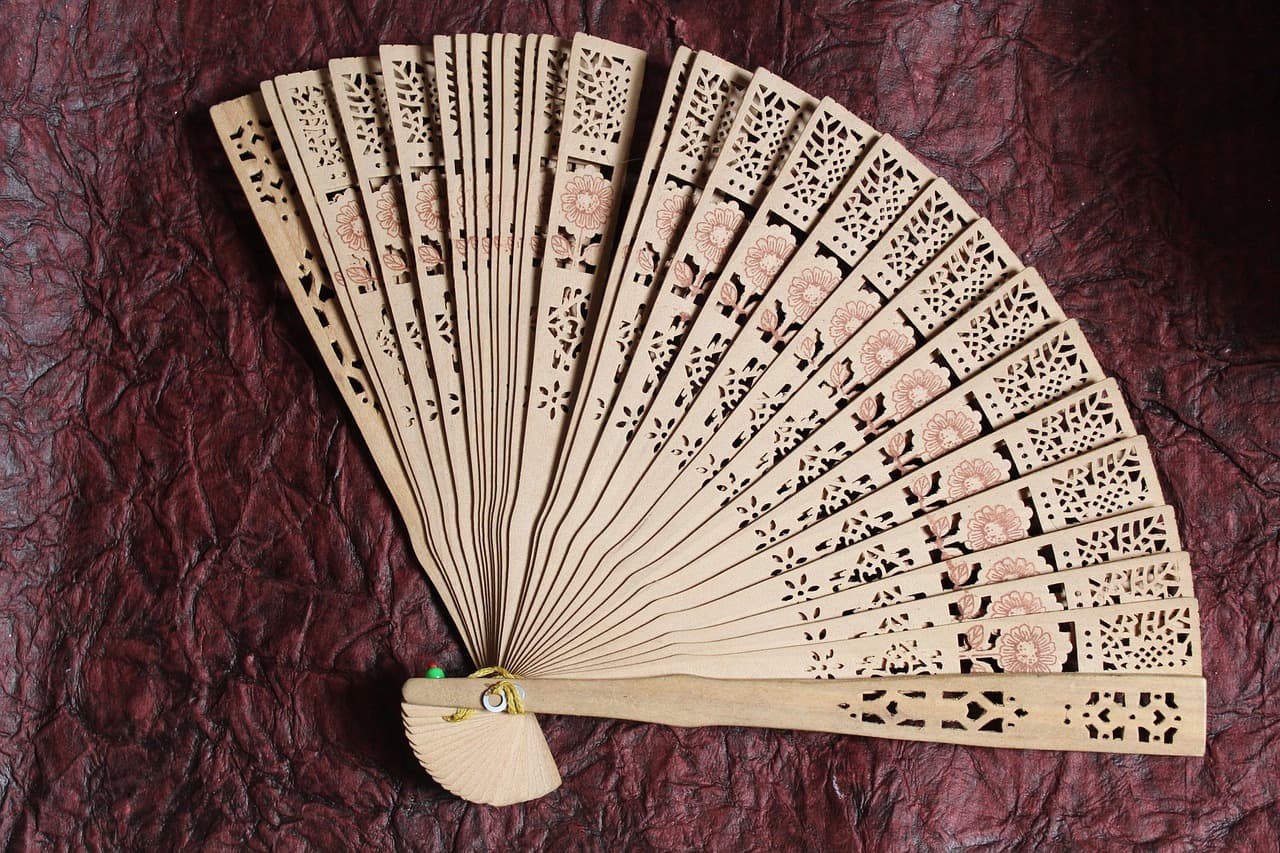
You're staring at two fans. One says 4000mAh, the other 10000mAh. The bigger number costs twice as much, so you assume it lasts more than twice as long. It doesn't. In fact, the 4000mAh fan might run longer. Here's the honest breakdown of what fan mAh meaning actually is, and the spec sheet trap that makes most people overpay.
What does mAh actually measure on a fan?
mAh stands for milliampere-hours. It's a measure of electrical charge, like the size of a fuel tank. A 4000mAh battery can deliver 4000 milliamps (4 amps) for one hour, or 1000 milliamps (1 amp) for four hours. Simple enough.
Advertisement
The problem: mAh only tells you the tank's size, not how thirsty the motor is. A fan with a weak, inefficient motor might draw 2 amps on high. A better-designed fan might draw only 1 amp for the same airflow. So the first fan burns through its 4000mAh in two hours, while the second stretches it to four. Same battery, double the runtime.
That's why comparing mAh numbers alone is like comparing cars by gas tank size without knowing their miles per gallon. You need both numbers.
Why does voltage matter more than you think?

Here's where most spec sheets get sneaky. mAh is measured at a specific voltage, usually 3.7V for a single lithium cell. But some fans use two cells in series, which doubles the voltage to 7.4V. If the manufacturer quotes the mAh of just one cell, the number looks bigger than it really is in terms of total energy.
Take a 10000mAh fan at 3.7V. That's 37 watt-hours (Wh) of energy. Now take a 5000mAh fan at 7.4V. That's also 37Wh. They have the same total energy, but the 10000mAh number looks twice as impressive. If you're not checking voltage, you're getting fooled.
Look for the watt-hour (Wh) rating if it's listed. That's the true energy figure. If it's not listed, you can calculate it: multiply the mAh by the voltage and divide by 1000. So 4000mAh at 3.7V is 14.8Wh. That's the number to compare.
How long does a 2000mAh fan actually last?
Let's get concrete. A typical mini handheld fan with a 2000mAh battery (3.7V) draws about 5 watts on high. That's roughly 1.35 amps. So on high, you get about 1.5 hours. Drop to low, where it draws maybe 2 watts (0.54 amps), and you get closer to 3.7 hours. That's a real-world range.
A 4000mAh fan doubles those numbers: roughly 3 hours on high, 7 hours on low. A 10000mAh fan, assuming the same motor efficiency, gives you 7.5 hours on high and 18 hours on low. But that's a big assumption. Some 10000mAh fans use cheaper, less efficient motors that draw more power, so real numbers could be 20% lower.
Here's a rough reference table based on typical fan designs:
| Battery Capacity | High Speed Runtime | Low Speed Runtime | Typical Airflow Feel |
|---|---|---|---|
| 2000mAh | 1.5 hours | 3.5 hours | Light breeze on face |
| 4000mAh | 3 hours | 7 hours | Noticeable cooling |
| 6000mAh | 4.5 hours | 10 hours | Good for desk use |
| 10000mAh | 7 hours | 15 hours | Strong for camping |
These are estimates. Actual numbers vary with motor quality, blade design, and battery health. But they give you a ballpark.
What's the real difference between 4000mAh and 10000mAh fans?
The practical difference isn't just runtime. It's weight and size. A 10000mAh battery is heavy. It adds maybe 150 grams (5 ounces) compared to a 4000mAh. That makes the fan awkward to hold for long periods or clip to a stroller. You're trading portability for endurance.
Charging time also scales. A 4000mAh fan charges in about 2 hours with a standard 2A charger. A 10000mAh fan takes 5 hours or more. If you forget to charge it overnight, you're stuck with a dead brick.
And price. 10000mAh fans often cost 50-80% more than 4000mAh ones. If you only need a fan for a commute or a desk, you're paying for capacity you'll never use. A 4000mAh fan covers a full workday if you're smart about using low speed.
How to choose the right mAh for your use case
Ask yourself one question: how long do you need it to run without a charge?
For a commute under an hour each way, a 2000mAh fan is plenty. You'll charge it every night, but it's light and cheap. For a full workday at a desk with a USB port nearby, a 4000mAh fan works. Just plug it in during lunch.
For camping, a day at the beach, or long flights, go with 6000mAh or higher. You want that buffer. But remember, you can always carry a power bank. A 10000mAh power bank costs less than a 10000mAh fan and can recharge a 4000mAh fan twice. That's often the smarter buy.
One more tip: check the charging port. USB-C is standard now, but some budget fans still use micro-USB. You don't want to carry a separate cable.
Does a higher mAh mean stronger airflow? No.
Airflow depends on the blade design, motor speed, and housing. A 2000mAh fan can blow harder than a 10000mAh fan if it has a better impeller. The battery only determines how long it can keep blowing. So if you see a fan bragging about its mAh while showing no CFM (cubic feet per minute) rating, be skeptical.
A good fan will list its airflow in CFM or at least describe it as "high velocity." If you can't find that spec, look at the blade size and speed settings. A fan with 3 speeds and a large blade will usually move more air than a single-speed model, regardless of battery.
Also, note that high speed drains the battery disproportionately. Running on high might use 3 times the power of low, but it might only give 1.5 times the airflow. So for battery life, use low when you can. The fan will last much longer, and you'll barely notice the difference in cooling.
What to look for beyond the mAh number
Here's a quick checklist for buying a battery fan:
- Wh rating: Calculate it if not listed. Compare energy, not just mAh.
- Motor type: Brushless motors are more efficient and quieter. Look for "brushless" in the specs.
- Speed settings: At least 2, ideally 3. More control over battery use.
- Charging speed: A 2A input charges faster than 1A. Some fans support fast charging.
- Weight: Hold it in your hand if you can. A 10000mAh fan might feel like a brick.
- Noise level: Listed in dB. Under 40dB is quiet, over 50dB is loud.
One product that gets this right is a mini handheld fan with a 4000mAh battery and brushless motor. It's light enough to carry in a pocket, runs about 6 hours on low, and charges via USB-C in under 2 hours. That's the sweet spot for most people.
The bottom line
Don't buy the biggest mAh number you can find. Buy the smallest that fits your actual need, then check the Wh and motor efficiency. A 4000mAh fan with a good motor will beat a 10000mAh fan with a cheap one in both runtime and portability. If you need more endurance, carry a power bank. That's the practical approach.
Next time you see a fan with a huge mAh number, ask what voltage it's at and how many watts it draws. You'll avoid the marketing trap and get a fan that actually works for you.