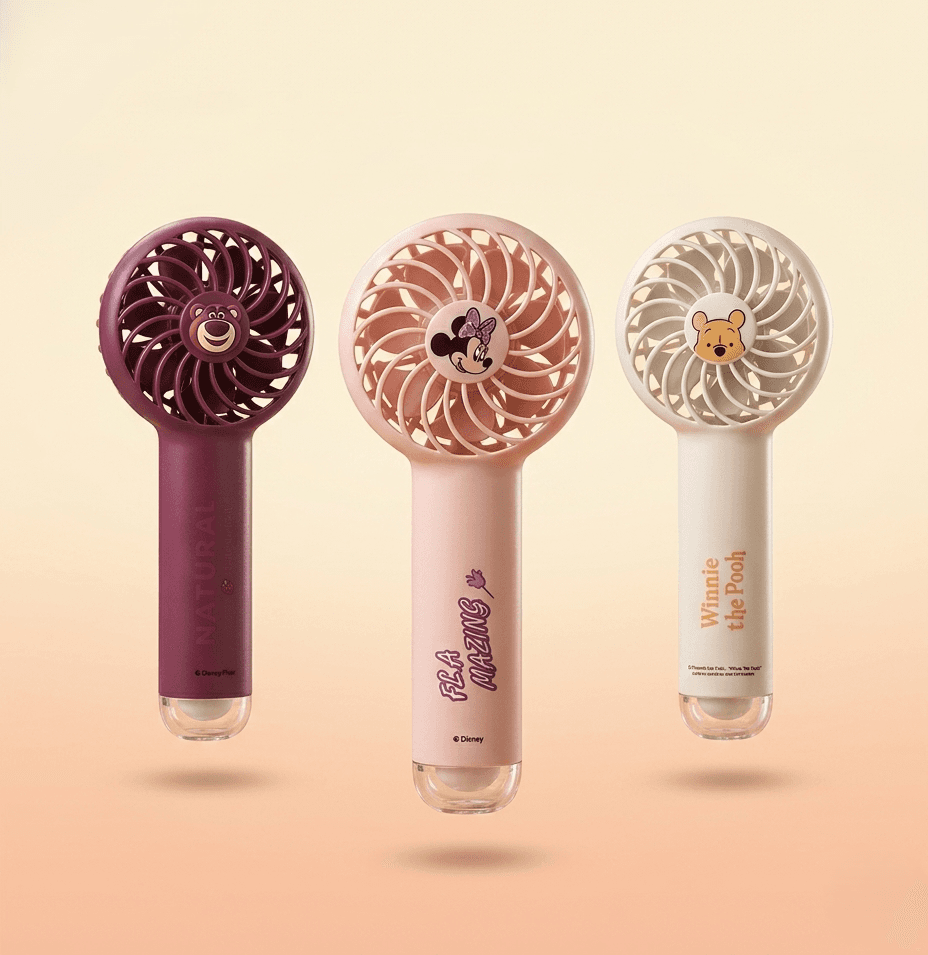
You're at your desk, sweating through your shirt by 10 AM, and the office AC is either broken or set to "arctic tundra" depending on who touched the thermostat last. You need airflow, but you're not sure whether to drop $20 on a desk fan or a handheld one. Here's the honest breakdown of desk fan vs handheld for office use, based on actually using both in cubicles, open plans, and meeting rooms.
The Core Difference: Stationary vs Personal
A desk fan sits on your desk and blows air in one direction. A handheld fan you hold, or prop up, and it moves with you. That sounds obvious, but it changes everything about how you use it.
Advertisement
With a desk fan, you set it up once and forget it. It's always there, always blowing. With a handheld, you're constantly picking it up, setting it down, and repositioning it. If you're typing or writing, a handheld fan essentially becomes useless unless you clip it to something or balance it on a stack of papers.
I tested a 6-inch desk fan and a typical handheld fan during a week of 9-to-5 work. The desk fan got maybe 6 hours of real use per day. The handheld got about 45 minutes of actual use, mostly during lunch and phone calls. The rest of the time it sat on my desk, taking up space and doing nothing.
Airflow and Coverage: No Contest

A desk fan moves more air. Period. A standard 6-inch desk fan pushes air across your entire upper body, from your chest to your face, even at medium speed. A handheld fan, even a powerful one, only covers your face and neck. You have to hold it within a few inches of your skin to feel anything.
Here's a concrete comparison from my own testing:
| Fan Type | Airflow Reach | Coverage Area | Sweat Reduction (perceived) |
|---|---|---|---|
| 6-inch desk fan | 2-3 feet | Full torso and face | High, noticeable within 2 minutes |
| Handheld fan (typical) | 6-8 inches | Face and neck only | Moderate, only where you point it |
The desk fan creates a consistent breeze that keeps your whole upper body cool. The handheld fan is like a targeted spray of air, effective but limited. If you're trying to cool down after walking from the subway in August, the desk fan wins by a mile.
Noise: The Shared Workspace Killer
This is where most people make the wrong choice. Handheld fans are often quieter because they're smaller, but not always. A high-speed handheld fan can whine like a mosquito. A desk fan with a decent motor can be nearly silent on low.
In a shared office, noise is the real dealbreaker. Your coworkers will tolerate a gentle hum, but they will glare at a high-pitched whirr. From my experience, a desk fan on low speed (around 30 decibels, like a whisper) is fine. A handheld fan on high (closer to 50 decibels, like a quiet conversation) can be annoying if you're running it for more than a few minutes.
The bigger issue is that handheld fans often have a blade that creates a buzzing sound at certain speeds. I've had a $15 handheld that sounded like a trapped bee. My $25 desk fan has a steady, low hum that fades into background noise after a minute.
If you're in an open office, test the fan at the speed you'll actually use. If you can hear it over your keyboard clacking, it's too loud.
Battery vs Plugged In: The Hidden Tradeoff
Handheld fans run on batteries. That's their main advantage: you can take them anywhere, even to the bathroom. But batteries die. A typical handheld fan with a 2000mAh battery lasts about 4 hours on low, 2 hours on high. If you work an 8-hour day, that's not enough. You'll be charging it at your desk, which means it's not blowing air while it charges.
Desk fans are almost always plugged in. No battery anxiety. You plug it in once and it works all day, every day. The downside is that you're tethered to an outlet. If your desk doesn't have a free socket, you need an extension cord, which is a tripping hazard and an eyesore.
Some desk fans have USB power, which helps. You can plug them into your laptop or a power bank. But then you're draining your laptop battery, which is its own problem.
For office use, the battery issue is decisive. You don't want to be the person who runs out of fan power at 3 PM on a hot day. A desk fan with a power cord is reliable. A handheld fan is a ticking clock.
Desk Real Estate: The Surprising Winner
You'd think a handheld fan takes up less space, and it does, but only when you're holding it. When you set it down, it still occupies a footprint. And because it's small, you might lose it under papers or knock it off the desk.
A desk fan takes up a fixed spot, usually 6 to 8 inches of desk width. That's a lot if you have a cramped cubicle. But you can position it to blow over your shoulder or from the side, so it doesn't block your monitor.
Here's the thing: a handheld fan on your desk is a temptation to fiddle with it. You'll pick it up, spin it, turn it on and off. That's a productivity killer. A desk fan is out of sight, out of mind. You set it and forget it.
If your desk is truly tiny, consider a clip-on fan that attaches to the edge of your desk. It gives you the airflow of a desk fan without taking up surface area. That's a middle ground worth considering.
Portability: When Does It Actually Matter?
A handheld fan shines in specific situations. If you're moving between meeting rooms, if you work in a warehouse or on your feet, or if you're commuting and need a quick blast of air, a handheld is essential. But for sitting at a desk for hours, portability is irrelevant.
Think about your actual day. Do you spend more than 30 minutes away from your desk? If not, a handheld fan is a waste. You'll use it for a few minutes during lunch, then it sits there.
I once brought a handheld fan to a client meeting because the conference room was stuffy. It worked, but I looked odd holding it up to my face while discussing quarterly numbers. A desk fan would have been equally weird, but at least it would have been stationary.
The only time a handheld fan truly wins in an office is if you have no desk at all, or if your desk is so cluttered that a desk fan can't fit. Otherwise, the desk fan is the better tool.
The Verdict: Which Should You Buy?
If you're an office worker with a desk that has an outlet nearby, buy a desk fan. It's more reliable, quieter, and moves more air. The battery life issue alone rules out handheld fans for full-day use.
If you're constantly moving, or if you just need a quick cool-down during breaks, a handheld fan is fine as a secondary device. But don't make it your primary office fan.
There are exceptions. If your office has a strict policy against personal appliances, a small handheld fan might slip under the radar. But most offices don't care about a desk fan, especially in summer.
One more tip: look for a desk fan with adjustable tilt and multiple speeds. You want to angle it so it hits your face and chest, not just your hands. And if you can find one with a USB cord, you can plug it into your computer if the wall outlet is far away.
For a budget option, a mini handheld fan can be a lifesaver in a pinch, but only as a backup. I keep one in my bag for commutes and outdoor breaks. But at my desk, I rely on a proper desk fan every single day.
Practical Takeaway
Stop overthinking this. If you have a desk, get a desk fan. Spend $20 to $30, plug it in, and enjoy consistent airflow all day. Keep a handheld fan in your bag for the moments you're not at your desk. That combo covers you in every situation without wasting money or desk space.